Bathsheba's journey to Bath
Far from the Madding CrowdBathsheba’s journey to Bath is a hurried attempt to regain control of a love affair that has become entangled with Boldwood’s anger and her own divided judgment. She sets out intending to tell Sergeant Troy in person that their engagement must end; instead, alone in an unfamiliar city and distressed by jealousy, she marries him. The journey’s decisive turn lies in the gap between its declared purpose and its consequence, a reversal Bathsheba later explains to Gabriel Oak so that he will not mistake her original intention.
Causes and Intended Purpose
Bathsheba sees two possible ways out of her predicament: keep Troy away from Weatherbury until Boldwood’s indignation has cooled, or give Troy up altogether. The second prospect torments her. She imagines the happier life she might have had if Troy were Boldwood and love coincided with duty, yet she cannot bring herself to relinquish her new attachment. Her understanding that Troy might soon cease to love her only intensifies her own love.
Rather than send a letter that might not reach Troy in time, Bathsheba decides to appeal to him face to face. She means to ask him to help resolve the dilemma and renounce her. The plan already contains a contradiction: an intimate meeting with the man she hopes to leave is a poor means of strengthening her resolve, and the narration leaves open whether she recognizes that it will at least secure one more encounter with him. Her action is not a settled choice of marriage but an urgent attempt to make a painful decision in person.
The Night Ride
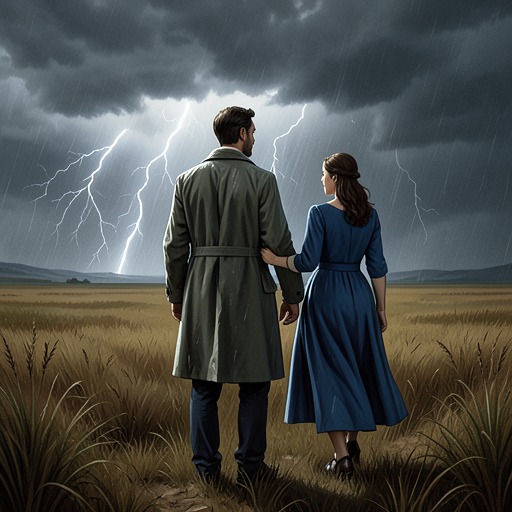
Bathsheba turns back toward Weatherbury so she can take a horse and gig, waiting until the village’s cottages are in bed and Boldwood is secure before setting out. She intends to reach Bath by morning, see Troy before he leaves to come to her, dismiss him, rest the horse, and start back early the next day. She expects to reach Liddy at Yalbury that evening and return to Weatherbury with her, concealing the visit to Bath from everyone.
The plan depends on a serious miscalculation: as a newcomer to the district, Bathsheba estimates the distance at little more than half its actual length. The journey is fearfully heavy even for a strong horse, and she is travelling alone at night. Still, she decides that letting events take their course would be worse, and her agitation overrules the caution that might have stopped her. She takes the gig and horse without waking Maryann, after failing to get into the house; unable to rouse anyone, she writes in chalk on the coach-house doors to explain that she has taken the vehicle and will return soon.
At the gate, Gabriel and Jan Coggan have followed because they think the horse has been stolen. Bathsheba tells them she is going to Bath and rebukes them for bringing trouble upon her by pursuing her. Coggan explains that they could not have seen her chalk message in the darkness, and that women do not generally drive at that hour. Her initial vexation gives way to recognition of their unusual devotion: she thanks them, though she wishes she had borrowed any horses but Boldwood’s. She has removed a stone from Dainty’s shoe herself and insists that the mare can continue. Gabriel and Coggan turn back, agreeing to keep the night’s pursuit quiet; Gabriel doubts that Bathsheba will reach Bath by daylight.
The Journey’s Reversal
Bathsheba’s purpose is to end the engagement, but what happens after she reaches Bath overturns that intention. In her later account to Gabriel, given while he is working on the barn during a storm, she stresses that she went there in the full intention of breaking things off with Troy. The change followed circumstances she had not anticipated: she was alone in a strange city, the horse was lame, and she did not know what to do. She became conscious, too late, that meeting Troy alone in this way might expose her to scandal.
Bathsheba says she was coming away when Troy told her that he had seen a woman more beautiful than she was and that he could not promise to remain constant unless Bathsheba became his at once. She describes herself as caught between jealousy and distraction, and says that she married him in that state. She also insists that Troy was not to blame for what he said: it was true that he had seen somebody else. The disclosure identifies jealousy, rather than a prior resolve to marry, as the immediate force that changed the journey’s outcome.
Consequences and Retrospective Meaning
The journey makes Bathsheba’s intended farewell the occasion of her marriage to Troy. Its cause-and-effect structure turns her attempt to prevent a future complication into the act that binds her more closely to the man she hoped to renounce. Her hurried departure, the lame horse, her isolation, the threat of scandal, and Troy’s provocation each narrow the space in which she can act; the final decision is hers, but it is made under pressure she did not anticipate when she left Weatherbury.
When Bathsheba recounts the night to Gabriel, she is concerned that he has mistaken the journey for a deliberate attempt to marry Troy. She explains herself because she values Gabriel’s good opinion and fears he might die while continuing to misunderstand her history. She does not present the explanation as a plea for his affection, and forbids him to comment on it. The later disclosure therefore changes the reader’s understanding of the journey without changing its outcome: Bathsheba did marry Troy, but that marriage was not the purpose with which she set out.